
A metal seated ball valve is an industrial ball valve designed for operating conditions where soft seated designs are no longer suitable. By using metal-to-metal contact between the ball and the seat, this type of valve is able to handle high temperatures, high pressures, and media containing solid particles. For this reason, metal seated ball valves are commonly used in oil and gas, petrochemical, power generation, and other heavy-duty process industries.
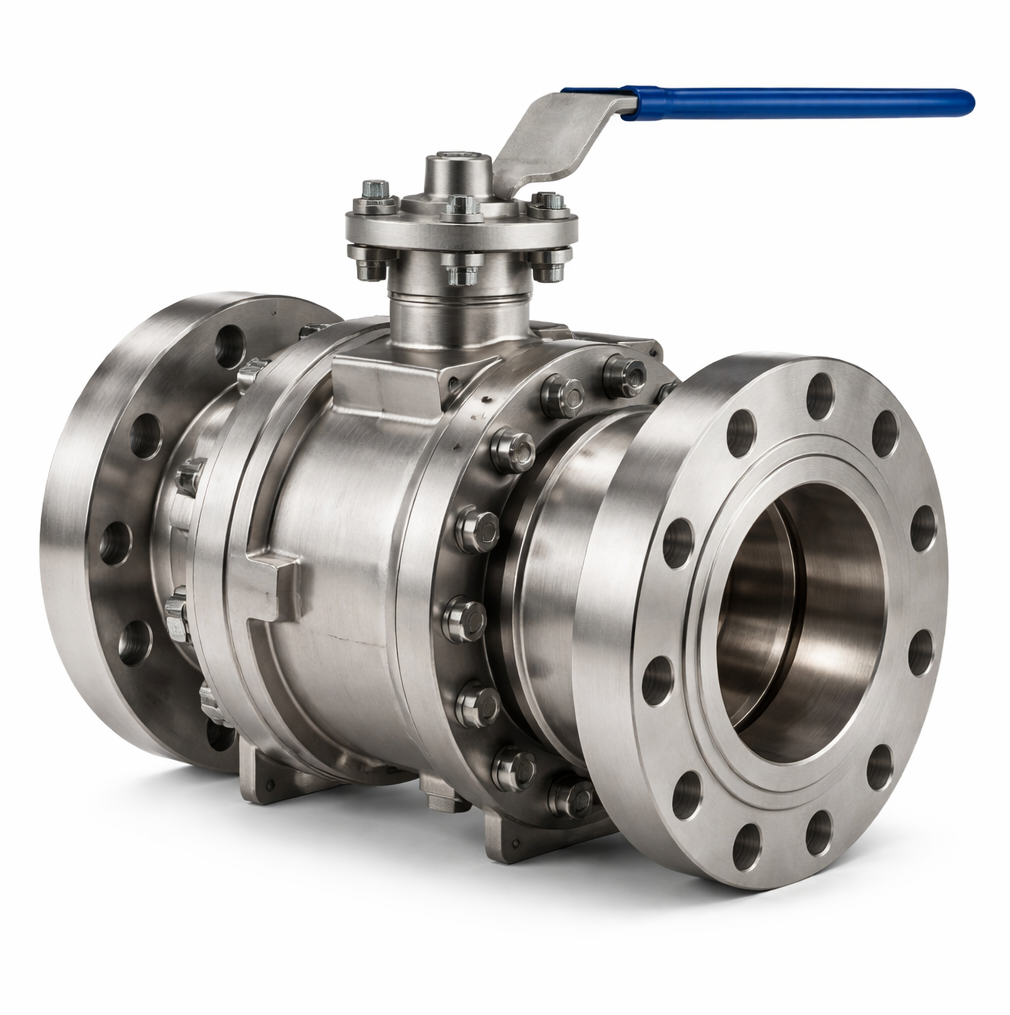
A metal seated ball valve uses metal components for both the ball and the valve seat instead of soft sealing materials such as PTFE. The sealing surfaces are precision-machined and typically treated with wear-resistant coatings to achieve consistent shutoff performance under severe operating conditions.
This design is primarily intended for services where soft seated ball valves would suffer from rapid wear, thermal degradation, or loss of sealing capability.
Like a standard ball valve, a metal seated ball valve controls flow by rotating a spherical ball with a through bore. A quarter-turn rotation aligns the bore with the pipeline to allow flow or positions it across the flow path to stop the media.
Sealing is achieved through controlled contact between the metal ball and metal seat. Spring-loaded or pressure-assisted seat designs are commonly used to maintain sealing force as operating pressure and temperature change. In high-temperature services, thermal compensation features help maintain contact between the sealing surfaces and reduce the risk of leakage caused by expansion or contraction.
Metal seated ball valves are typically specified when process conditions exceed the operating limits of soft seated valves. Common reasons include:
Under these conditions, metal-to-metal sealing provides better resistance to wear and deformation, allowing the valve to remain in service for longer periods.
The sealing surfaces are engineered to maintain controlled contact under pressure and temperature variation. This allows the valve to operate reliably even as wear occurs over time.
To improve resistance to erosion and corrosion, the ball and seat are often treated with hard-facing materials such as tungsten carbide, chromium carbide, or Stellite.
Both floating and trunnion mounted designs are used for metal seated ball valves. Trunnion mounted valves are generally preferred for larger sizes and higher pressure ratings due to lower operating torque and improved structural support.
Metal seated ball valves are commonly designed to meet fire-safe requirements and include anti-blowout stem construction for additional safety in critical installations.
Valve bodies, balls, and seats are manufactured from carbon steel, stainless steel, or alloy steel depending on the service conditions. Material selection is based on pressure rating, temperature, and media compatibility.
Surface treatments such as hard-facing or thermal spray coatings are applied to sealing areas to extend service life. These treatments are particularly important in applications involving abrasive or corrosive process media.
Metal seated ball valves are used in a wide range of severe service applications, including:
In many of these services, valve reliability is directly linked to plant availability and operational safety.
Both metal seated and soft seated ball valves are used for isolation duties, but their performance differs depending on service conditions:
Selection should be based on operating requirements rather than initial purchase cost alone.
When selecting a metal seated ball valve, the following factors should be evaluated:
Careful evaluation at the selection stage helps avoid premature valve failure and unplanned maintenance.
A metal seated ball valve is designed for applications where high temperature, high pressure, or abrasive media make soft seated valves impractical. Through metal-to-metal sealing and hardened sealing surfaces, these valves provide reliable isolation in severe service conditions. Understanding their design and application is essential for selecting the appropriate valve for demanding industrial processes.