
A V type ball valve is a specialized form of ball valve designed for precise flow regulation. Unlike standard ball valves that are mainly used for on/off control, this valve features a V-shaped notch in the ball, allowing more accurate throttling and flow control across a wide range of applications.
It is widely used in industries that require stable and adjustable flow performance, including chemical processing, water treatment, oil and gas, and power generation.
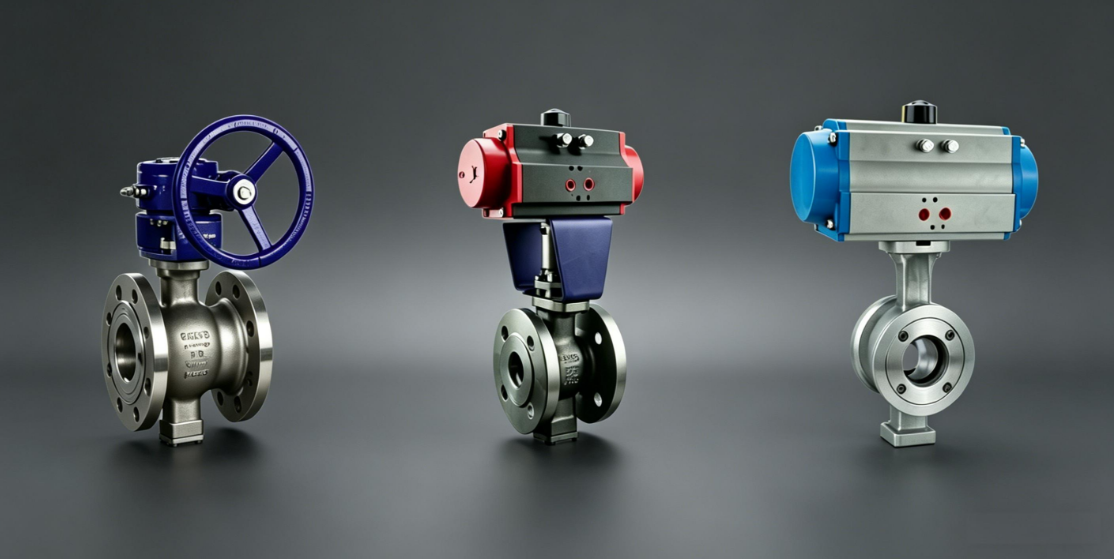
A V type ball valve operates similarly to other ball control valves, but with one key difference: the ball inside the valve has a V-shaped opening instead of a full circular bore.
As the valve rotates:
This structure allows the valve to handle both high flow capacity and precise control, making it a hybrid between traditional ball valves and control valves.
The V-shaped opening enables consistent and predictable flow adjustment, which is not possible with standard port ball valves.
The sharp edges of the V-cut can cut through fibers, slurries, or viscous fluids, reducing the risk of clogging.
These valves offer a large turndown ratio, making them suitable for both low and high flow conditions.
Despite being used for throttling, they still maintain good sealing capability when fully closed.
Common materials include stainless steel, carbon steel, and alloy steel, ensuring resistance to corrosion and wear.
| Feature | V Type Ball Valve | Standard Ball Valve |
|---|---|---|
| Flow Control | Precise | Limited (mainly on/off) |
| Ball Design | V-shaped notch | Full or reduced bore |
| Application | Throttling + isolation | Isolation |
| Performance | Stable and linear | Quick opening/closing |
Standard ball control valves are suitable for shut-off applications, while V type valves are preferred when flow control is required.
V type ball valves are used in systems where flow control must be stable and reliable:
They are especially effective in handling:
Compared to traditional globe valves or gate valves, V type ball valves offer:
This makes them a practical choice for demanding industrial environments.
Understanding related valve types helps clarify where V type valves fit:
Among these, the V port design stands out for combining control accuracy with durability.
When selecting a valve, consider:
A V type ball valve is designed for flow control using a V-shaped notch, while a normal ball valve is primarily used for on/off operation with limited control capability.
They are commonly used in industries such as chemical processing, water treatment, oil and gas, and pulp and paper, especially where precise flow control is required.
Yes, it can provide tight shut-off, but its main advantage lies in flow regulation rather than simple isolation.
Typical materials include stainless steel, carbon steel, and alloy steel, depending on the application and media.
Yes, the V-shaped notch provides a shearing effect that helps handle slurries and prevents clogging.
A V type ball valve is a versatile solution for systems that demand both durability and accurate flow control. By combining the strengths of traditional ball valves with enhanced throttling capability, it offers improved performance across a wide range of industrial applications.